


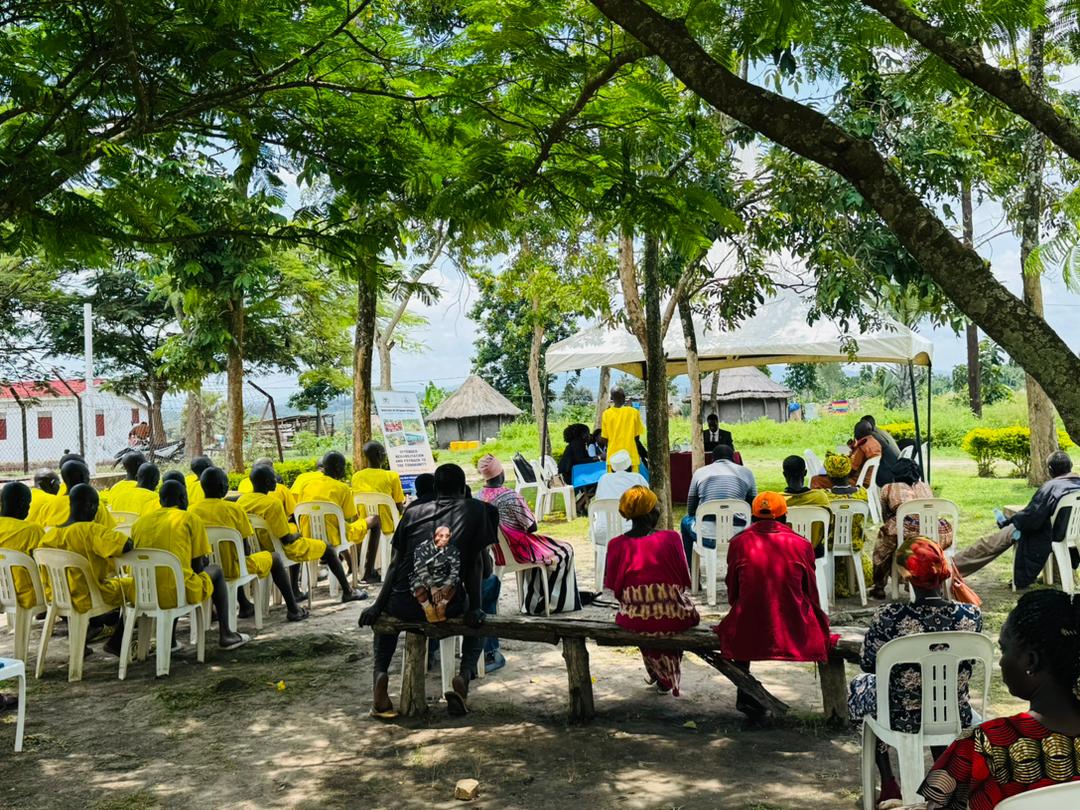
Under this Key Result Area, the Directorate is responsible for ensuring that Community Service orders are issued by all courts across the country through conducting a number of activities which include the following;
- Sensitisation of offenders and identify eligible ones for Community service Order,
- Preparing Social Inquiry Reports,
- Supervising offenders serving Community Service orders and
- Giving feedback to sentencing Courts. sanctioning.
The Social inquiry reports are put in the file of offender before it is forwarded to the State Prosecutor for sanctioning.
The most common offences registered under Community Service are rogue and vagabond, theft, assault, criminal trespass, possession of opium among others.
Community Service Orders
Community Service Orders (CSO) are issued by courts as a sentence to deserving offenders rather undergo imprisonment or payment of a fine.
The reporting period (2018-19) indicates a total of 10,107 (842 females, 9265 males) convicts were sentenced to perform community service orders representing 73 % of the annual target of 13871 orders. The number of community service orders account for 45.4% of all convictions in the country in the reporting period.
This indicates the potential contribution of CSOs as a sentence towards decongestion of prisons. However, as acknowledged that Community Service as a sentencing option is more pronounced at the tail of the chain of justice, more efforts aiming at decongestion through identification of eligible offenders in police cells and prison should be encouraged.
Orders issued by High Court
The High Court has continued to issue Community Service orders . Of the total number of orders issued, the High Court issued four orders as shown in table 2. The continuous issuance of orders by High Court as a first court of instance further clarifies the misconception that CSO is not for petty offenders only.
Orders by Gender
The Directorate has continued to focus on gender mainstreaming in terms of work allocated to females and supervision of such female offenders. In the reporting period, a total of 842 female offenders were supervised as compared to 9265 males.
Although Kampala Extra region registered the highest number of offenders in the reporting period, only 10.9 % were women. Northern region had the highest number of female offenders sentenced to Community Service.
Social Inquiry Reports
In an effort to entrench the sentencing guidelines practice, the Directorate aims at preparing a social inquiry report for every eligible offender as provided for by the law. Social Inquiry reports provide courts with an offender’s character and circumstances which may be needed by court before sentencing. In the reporting period 2018-19, a total of 10,165 social inquiry reports were made;